Introduction to the R6 Marketplace
The rise of in-game economies has reshaped modern gaming, and the R6 marketplace stands as a strong example of this transformation. Within Tom Clancy’s Rainbow Six Siege, players are no longer limited to earning or unlocking cosmetics through gameplay alone. Instead, they now have access to a dynamic trading environment where digital items carry real perceived value.
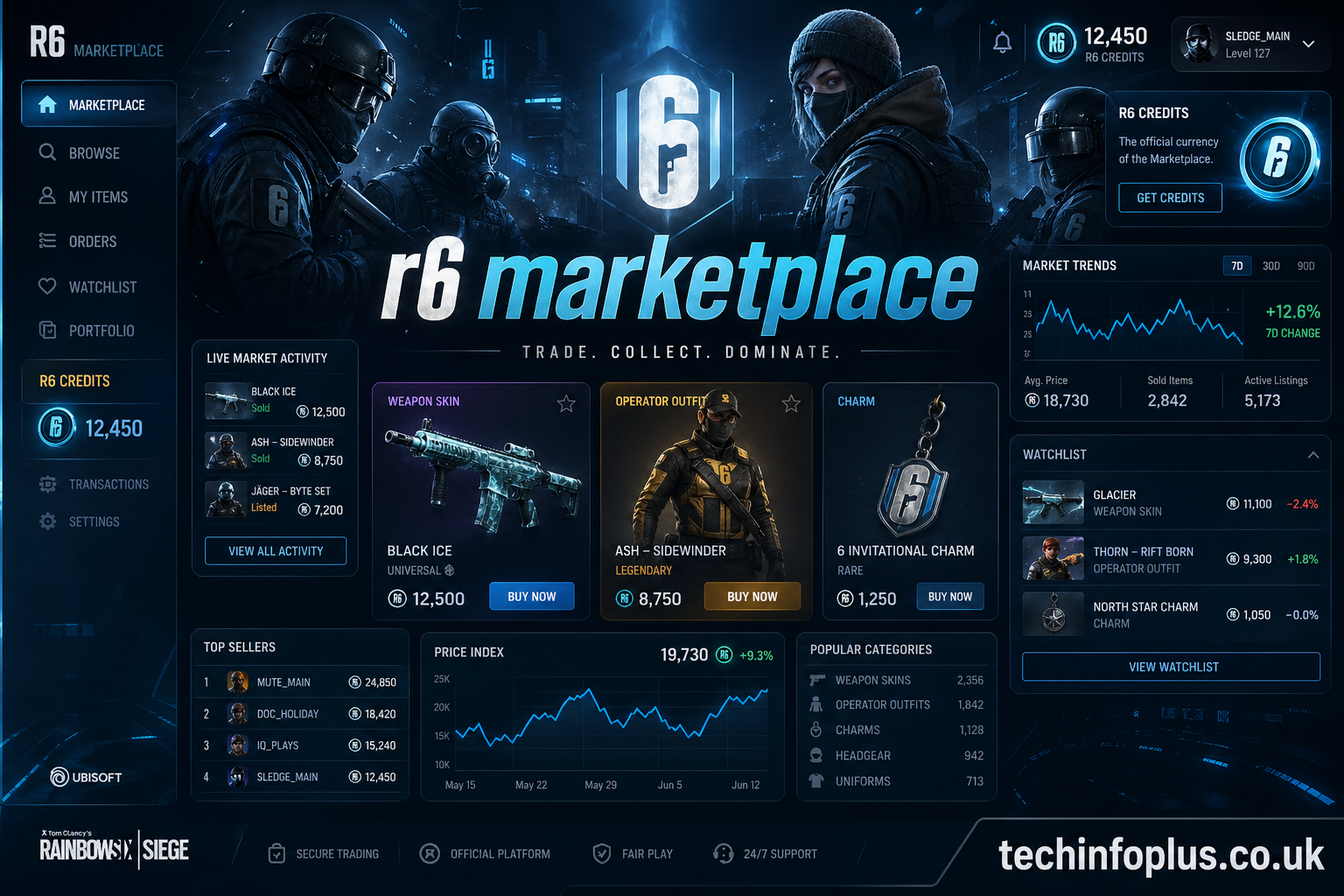
The R6 marketplace is essentially a player-driven system where cosmetic items such as skins, charms, and operator outfits can be bought and sold. This shift has given players more control over their inventory and introduced a new layer of strategy beyond gameplay. Rather than relying purely on chance or limited-time events, players can now directly acquire items they desire.
As gaming communities continue to evolve, marketplaces like this are becoming central to player engagement. They offer not only customization but also a sense of ownership and participation in a broader digital economy, making them a vital feature in modern multiplayer titles.
Understanding How the R6 Marketplace Works
At its core, the R6 marketplace operates on a supply-and-demand model. Players list items for sale at a chosen price, while others place bids based on what they are willing to pay. When both sides align, the transaction is completed automatically, creating a seamless trading experience.
The system uses R6 Credits, the premium currency within the game. This ensures that all transactions remain within the ecosystem controlled by Ubisoft. While players can earn value within the game, they cannot convert these credits into real-world money, keeping the marketplace focused on in-game utility rather than external profit.
This structure mirrors real-world financial markets in a simplified way. Prices fluctuate based on demand, rarity, and player interest, making the marketplace feel alive and constantly changing. Understanding these mechanics is key for anyone looking to navigate it effectively.
Evolution of Trading in Rainbow Six Siege
Before the introduction of the official marketplace, trading in Rainbow Six Siege was largely informal and often risky. Players turned to third-party websites, social media groups, and direct account trading to obtain rare items. These methods lacked security and frequently led to scams or account penalties.
The launch of the official marketplace marked a significant shift. By centralizing trading within the game’s ecosystem, Ubisoft eliminated many of the dangers associated with external platforms. Transactions became automated, secure, and transparent, offering players peace of mind.
This evolution also standardized pricing and availability. Instead of fragmented markets with inconsistent values, players now operate within a unified system. This has improved fairness and made trading more accessible to a wider audience, from casual players to dedicated collectors.
Types of Items You Can Buy and Sell
The R6 marketplace focuses exclusively on cosmetic items, which enhance visual customization without affecting gameplay performance. These include weapon skins, operator uniforms, headgear, charms, and attachment skins. Each item contributes to a player’s identity within the game.
One of the most appealing aspects of the marketplace is access to rare and legacy items. Skins from past seasons or limited-time events often return through player listings, allowing newer players to obtain content they previously missed. This creates a sense of continuity and keeps older content relevant.
However, not all items are immediately tradable. Ubisoft controls which cosmetics can enter the marketplace, often delaying the availability of newer items. This approach helps maintain balance and prevents the market from being flooded with recently released content.
Key Features of the Official R6 Marketplace
The R6 marketplace is built around automation and security. Unlike direct player-to-player trading, all transactions are handled through a system that matches buy and sell orders. This eliminates the need for negotiation and reduces the risk of fraud.
Another important feature is pricing flexibility. Players have the freedom to set their own prices or place bids at specific values. This allows for strategic trading, where users can take advantage of market trends to maximize their returns.
Security measures are also a major strength. With account protections such as two-factor authentication and system monitoring, the marketplace provides a safe environment for transactions. This level of protection was largely absent in earlier trading methods.
Benefits of Using the R6 Marketplace
One of the biggest advantages of the R6 marketplace is the ability to turn unused items into value. Players can sell cosmetics they no longer need and use the credits to purchase new skins or other in-game content. This adds a layer of efficiency to inventory management.
The marketplace also improves accessibility. Instead of relying on random drops or limited-time events, players can directly acquire the items they want. This removes much of the frustration associated with chance-based systems and gives players more control.
Additionally, the marketplace enhances community engagement. By creating a shared economy, it encourages interaction and keeps the player base active. Items gain new life as they circulate, and the game remains fresh even for long-term players.
Challenges and Limitations of the R6 Marketplace
Despite its many benefits, the R6 marketplace has certain limitations. One of the most notable is the restriction to in-game currency. Players cannot convert their earnings into real money, which limits the marketplace’s appeal for those seeking financial profit.
Another challenge is item availability. Since Ubisoft controls which items are tradable, some players may find that their desired skins are not yet accessible. This can create frustration, especially for collectors looking to complete specific sets.
There are also occasional technical and security concerns. Like any online system, the marketplace depends on stable servers and strong protection against exploits. While Ubisoft continues to improve these aspects, disruptions can still occur and impact user experience.
Strategies for Success in the R6 Marketplace
Navigating the R6 marketplace effectively requires a combination of patience, observation, and strategy. Players who take the time to study pricing trends and demand patterns are more likely to make successful trades.
Timing plays a crucial role. Prices can fluctuate based on updates, events, and player interest. Buying items when demand is low and selling when it rises can lead to better returns. This approach requires careful monitoring and a willingness to wait.
Diversification is another important strategy. Instead of investing heavily in a single item, spreading resources across multiple cosmetics can reduce risk. This ensures that even if one item loses value, others may still perform well.
The Influence of Community and Market Trends
The R6 marketplace is deeply influenced by the player community. Trends often emerge based on popularity, rarity, and cultural significance within the game. Certain skins become iconic and maintain high demand over time.
Community discussions on forums and social platforms play a significant role in shaping these trends. Players share insights, track prices, and discuss strategies, creating a collaborative environment where knowledge is constantly exchanged.
This collective behavior drives the marketplace forward. It transforms trading into a social experience, where players are not just participants but active contributors to the economy. Understanding these dynamics can provide a significant advantage.
Future of the R6 Marketplace and Conclusion
The future of the R6 marketplace looks promising as Ubisoft continues to refine its features and expand its capabilities. With potential improvements in analytics, filtering systems, and item availability, the platform is expected to become even more user-friendly.
As the game evolves, the marketplace may also introduce new types of tradable content and enhanced tools for tracking value. These developments could further strengthen its role as a central feature of the game’s ecosystem.
In conclusion, the R6 marketplace represents a major advancement in gaming economies. It empowers players, enhances customization, and creates a dynamic environment where digital items hold meaningful value. By understanding its mechanics and applying thoughtful strategies, players can fully benefit from this system while enjoying a richer and more engaging experience in Rainbow Six Siege.