Introduction to 111.09.150.182 and Its Relevance
In today’s highly connected digital world, IP addresses play a fundamental role in enabling communication across the internet. One such address, 111.09.150.182, may appear as just a random string of numbers, but it carries important technical and practical significance. Every device connected to the internet is assigned an IP address, and understanding how a specific IP works can provide insights into networking, cybersecurity, and online tracking.
The keyword 111.09.150.182 is often searched by users who encounter it in server logs, analytics dashboards, or suspicious activity reports. This article explores the technical background, real-world applications, risks, and best practices related to this IP address. By the end, you will have a clear, trustworthy understanding of how such IPs
function and why they matter in everyday digital interactions.
Understanding IPv4 Addresses and Their Structure
The IP address 111.09.150.182 belongs to the IPv4 (Internet Protocol version 4) system, which is still widely used across the globe. IPv4 addresses consist of four numerical segments, known as octets, each ranging from 0 to 255. These numbers are separated by periods, forming a structure that is both simple and efficient for routing internet traffic.
Each part of the IP address serves a purpose. The earlier segments typically represent the network portion, while the later segments identify the specific device within that network. This hierarchical design ensures that data packets travel efficiently from source to destination. When you access a website or send a request, your device communicates using an IP address like 111.09.150.182 to ensure accurate delivery.
Network Allocation and ISP Association
IP addresses such as 111.09.150.182 are not randomly generated but are assigned by Internet Service Providers (ISPs). These providers receive large blocks of IP addresses from global internet authorities and distribute them to users and devices within their network.
The IP range that includes 111.09.150.182 is typically associated with a specific region or country, depending on the ISP’s allocation. However, this does not mean the address belongs permanently to one user. Many ISPs use dynamic IP allocation, meaning the same address can be reassigned to different users over time. This dynamic nature adds a layer of complexity when analyzing IP activity.
Geolocation Insights and Accuracy Limits
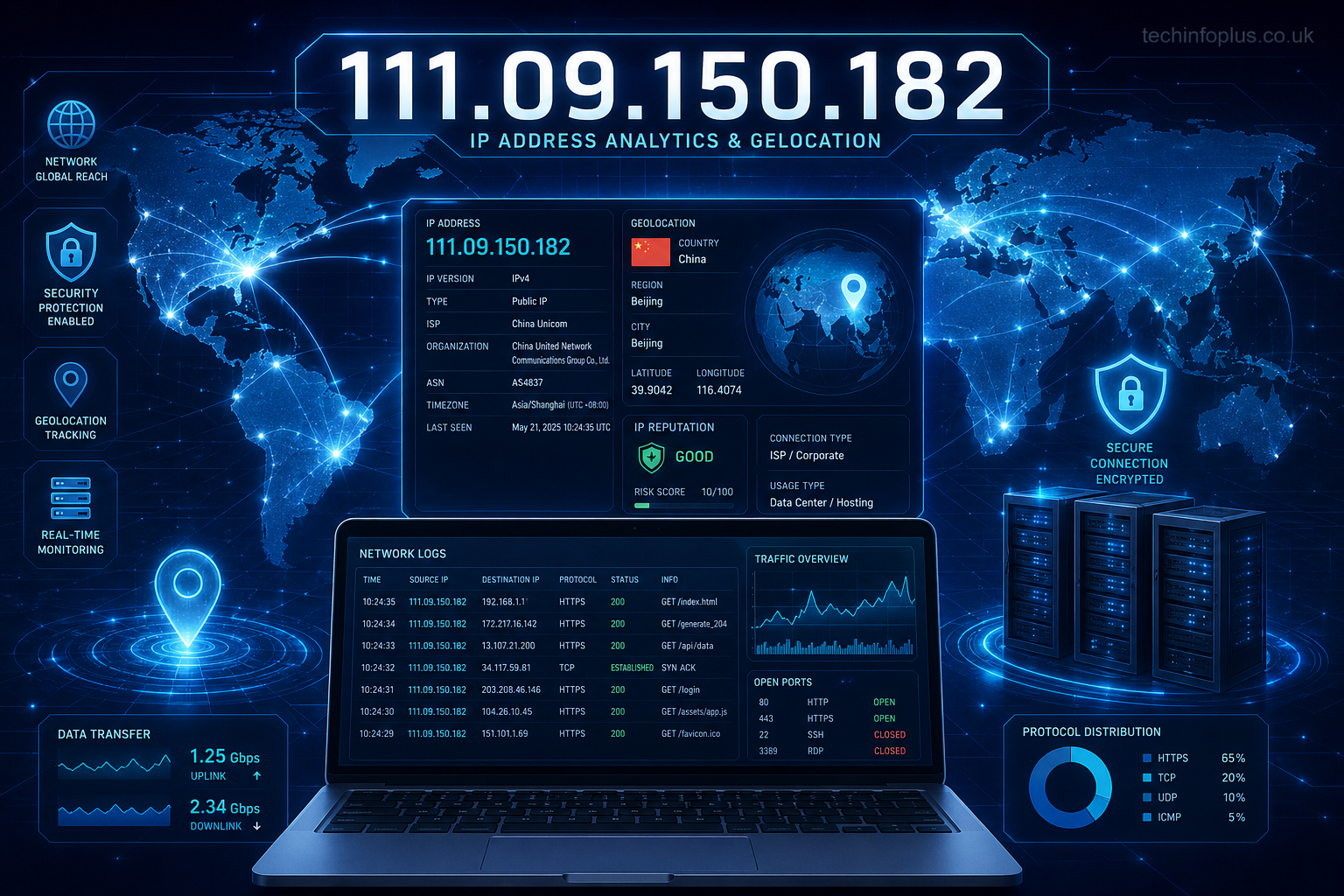
One of the most common reasons people search for an IP like 111.09.150.182 is to determine its geographic location. IP geolocation tools can estimate the country, region, and sometimes the city associated with an IP address. This information is derived from ISP databases and network infrastructure mappings.
However, it is important to understand the limitations of IP geolocation. The results are approximate and do not reveal an exact physical address. In many cases, the location shown may correspond to the ISP’s server location rather than the user’s actual position. Despite these limitations, geolocation remains valuable for content personalization, fraud detection, and regional analytics.
Role of 111.09.150.182 in Web Traffic and Analytics
From a digital marketing and analytics perspective, IP addresses like 111.09.150.182 provide useful data about website visitors. Businesses analyze incoming traffic based on IPs to understand user behavior, identify trends, and improve user experience.
For example, tracking IP-based traffic helps determine which regions generate the most engagement. It also enables companies to tailor content, advertisements, and services to specific audiences. While the IP itself does not reveal personal identity, it contributes to broader data patterns that drive decision-making in online platforms.
Cybersecurity Considerations and Risk Factors
IP addresses can sometimes be linked to suspicious or malicious activity. When administrators notice repeated requests from an IP such as 111.09.150.182, they may investigate further to determine whether it is legitimate traffic or a potential threat.
Common security concerns include brute-force login attempts, automated bots, and unusual traffic spikes. However, it is essential to approach such situations carefully. An IP address alone is not proof of malicious intent. Since many users can share or reuse the same IP over time, context and additional data are required for accurate threat assessment.
Tools and Methods to Analyze 111.09.150.182
There are several ways to analyze an IP address like 111.09.150.182. One common approach is using IP lookup tools, which provide details such as ISP information, approximate location, and network type. These tools are widely accessible and easy to use.
Another method is conducting a WHOIS lookup. This reveals information about the organization that owns the IP range, including administrative and technical contacts. Additionally, network diagnostic tools such as ping and traceroute can be used to measure connectivity and identify routing paths. Together, these methods offer a comprehensive understanding of how an IP operates within the network.
Common Misconceptions About IP Addresses
There are many myths surrounding IP addresses, and 111.09.150.182 is no exception. One widespread misconception is that an IP address can directly identify a person. In reality, IP addresses are tied to networks, not individuals, and privacy laws protect user information.
Another misunderstanding is that IP addresses remain constant. While some organizations use static IPs, most users are assigned dynamic addresses that change periodically. This makes long-term tracking difficult and reinforces the importance of interpreting IP data carefully. Understanding these misconceptions helps users avoid false assumptions and misuse of information.
Importance of IP Awareness for Businesses and Individuals
Awareness of IP addresses like 111.09.150.182 is valuable for both businesses and individuals. For organizations, it supports better security practices, improved analytics, and enhanced user experience. Monitoring IP activity allows companies to detect anomalies and respond quickly to potential threats.
For individuals, understanding IP addresses increases digital literacy. It helps users recognize how their online activities are tracked and how to protect their privacy. This knowledge is especially important in an era where cybersecurity threats and data privacy concerns are constantly evolving.
Practical Steps to Enhance Security and Privacy
Maintaining security when dealing with IP-related data requires a proactive approach. One effective strategy is using firewalls and intrusion detection systems to monitor incoming traffic. These tools help filter out suspicious activity and protect sensitive data.
Another important step is using a Virtual Private Network (VPN). A VPN masks your real IP address, making it harder for third parties to track your online behavior. Regularly reviewing server logs and monitoring unusual IP activity also plays a crucial role in maintaining a secure digital environment. These practices ensure both safety and privacy in online interactions.
Conclusion: Why 111.09.150.182 Matters in the Digital Landscape
The IP address 111.09.150.182 may seem like a simple technical detail, but it represents a critical component of internet functionality. From enabling communication to supporting analytics and cybersecurity, it plays a multifaceted role in the digital ecosystem.
By understanding how this IP address works, its limitations, and its applications, users can make more informed decisions about their online activities. Whether you are a business owner, IT professional, or everyday internet user, knowledge of IP addresses enhances your ability to navigate the digital world safely and effectively.