Introduction to gollupilqea1.1 Bot
In today’s fast-moving digital environment, automation has become more than a convenience—it is now a necessity. Businesses, developers, and online platforms increasingly rely on intelligent systems to manage repetitive processes and improve efficiency. One such emerging concept is the gollupilqea1.1 bot, a term that has started to appear in discussions related to advanced automation, backend systems, and workflow optimization. While it may not yet be widely documented in mainstream tech resources, its structure and behavior reflect modern trends in bot-driven systems.
The gollupilqea1.1 bot is often understood as a lightweight, adaptive automation agent that operates within a digital system. It is designed to perform tasks in the background, respond to triggers, and support user interactions without constant supervision. As more systems shift toward automation-first architectures, tools like this bot are becoming increasingly valuable for maintaining performance, accuracy, and scalability.
Understanding the Concept Behind gollupilqea1.1 Bot
To fully grasp the role of the gollupilqea1.1 bot, it is important to understand the broader concept of intelligent bots. These systems are typically built to automate workflows, reduce manual input, and streamline processes across platforms. The naming structure “gollupilqea1.1” suggests a version-controlled system, indicating that the bot is part of an evolving framework that receives updates and improvements over time.
Unlike simple scripts, this bot is designed to integrate deeply within a system’s architecture. It works alongside databases, APIs, and user interfaces to create a smooth and efficient digital experience. Its behavior is often event-driven, meaning it reacts to specific triggers such as user actions, system alerts, or data changes. This allows it to operate in real time, making it a practical solution for modern applications.
Core Features and Functional Capabilities
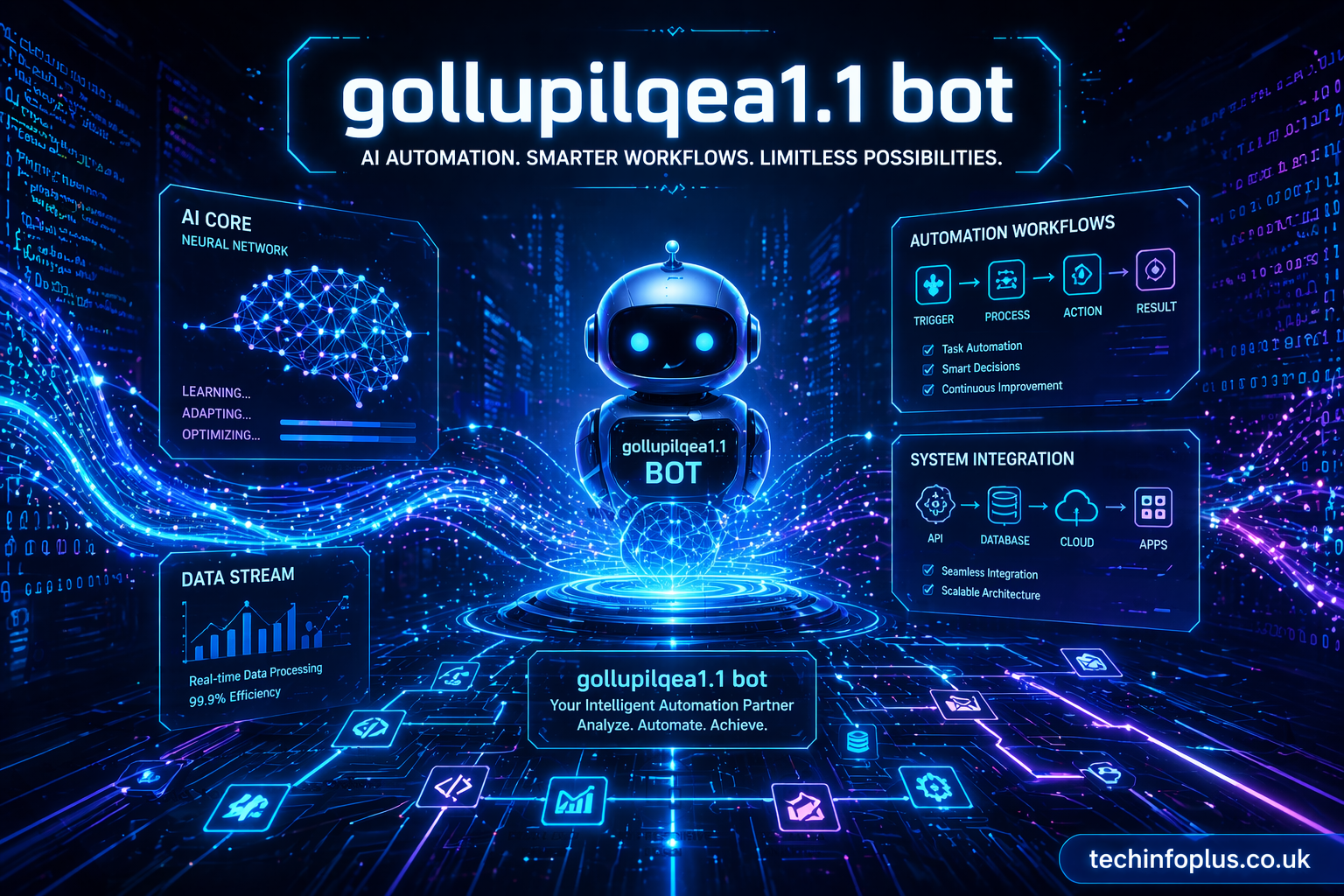
The gollupilqea1.1 bot is defined by several core features that make it a versatile tool in automation environments. One of its primary capabilities is task automation, where it handles repetitive or time-consuming processes without requiring manual input. This includes activities such as data processing, system monitoring, and user notification management.
Another important feature is its ability to operate continuously in the background. The bot does not require constant user interaction, which allows systems to function more efficiently. It can also adapt to predefined rules and workflows, ensuring that tasks are executed consistently and accurately. This level of automation helps reduce operational delays and enhances overall productivity.
How gollupilqea1.1 Bot Works in Digital Systems
The working mechanism of the gollupilqea1.1 bot revolves around input processing, rule-based logic, and automated output generation. When a specific condition is met within a system, the bot processes the input data and triggers an appropriate response. This could include sending notifications, updating records, or executing commands within the platform.
In more advanced setups, the bot may incorporate adaptive logic that allows it to improve over time. By analyzing patterns and outcomes, it can refine its responses and become more efficient. This makes it particularly useful in environments where data flows continuously and requires real-time decision-making. Its ability to function without direct supervision makes it a valuable component in modern digital infrastructure.
Role in Automation and Workflow Optimization
Automation is at the heart of the gollupilqea1.1 bot’s functionality. By handling repetitive tasks, it allows businesses and developers to focus on more strategic activities. This is especially important in large-scale systems where manual management can become inefficient and error-prone. The bot acts as a digital assistant that ensures processes run smoothly and consistently.
Workflow optimization is another area where this bot proves valuable. It helps streamline operations by connecting different parts of a system and ensuring that tasks are completed in the correct sequence. This reduces bottlenecks and improves overall system performance. As a result, organizations can achieve higher efficiency while maintaining accuracy and reliability.
Benefits of Using gollupilqea1.1 Bot
One of the most significant benefits of the gollupilqea1.1 bot is increased efficiency. By automating routine tasks, it reduces the time and effort required to manage systems manually. This leads to faster operations and improved productivity, making it an attractive solution for businesses and developers alike.
Another key advantage is consistency. Since the bot operates based on predefined rules, it performs tasks in a uniform manner every time. This minimizes the risk of human error and ensures reliable results. Additionally, its real-time responsiveness allows it to address issues as they arise, improving system stability and user experience.
Real-World Applications and Use Cases
The gollupilqea1.1 bot can be applied across a wide range of industries and digital environments. In customer service, it can assist with handling basic queries and providing automated responses, reducing the workload on support teams. In e-commerce platforms, it can manage order processing, update inventory, and send notifications to customers.
In data-driven industries, the bot can process large volumes of information and generate insights. It can also be used in content management systems to automate publishing workflows and monitor performance metrics. Its adaptability makes it suitable for both small-scale applications and complex enterprise systems.
Security, Maintenance, and System Integration
Security is a critical factor when implementing any automation tool, and the gollupilqea1.1 bot is no exception. Since it operates within a system, it must be configured with proper security protocols to prevent unauthorized access and data breaches. Regular updates and monitoring are essential to maintain its integrity and performance.
System integration is another important aspect of its functionality. The bot is designed to work seamlessly with existing platforms, allowing it to interact with databases, APIs, and other components. This ensures that it can operate effectively without disrupting the overall system. Proper maintenance and configuration are key to maximizing its potential and ensuring long-term reliability.
Challenges and Limitations of gollupilqea1.1 Bot
Despite its advantages, the gollupilqea1.1 bot also presents certain challenges. One of the main issues is the lack of widespread documentation, which can make it difficult for new users to fully understand its capabilities. This can lead to confusion and improper implementation if not addressed carefully.
Another limitation is the need for accurate configuration. Since the bot relies on predefined rules, any errors in setup can result in unintended outcomes. This highlights the importance of careful planning and testing before deployment. Additionally, while the bot can handle many tasks, it may still require human oversight for complex decision-making processes.
Future Potential and Evolution
The future of the gollupilqea1.1 bot is closely tied to the broader evolution of automation and artificial intelligence. As technology continues to advance, bots like this are expected to become more sophisticated, incorporating machine learning and predictive analytics to enhance their performance. This will allow them to handle more complex tasks and provide even greater value.
As industries continue to adopt automation, the demand for intelligent bots will only increase. The gollupilqea1.1 bot represents a step toward more integrated and adaptive systems that can operate independently while supporting human decision-making. Its ongoing development and potential improvements make it an interesting subject in the field of modern automation.
Conclusion
The gollupilqea1.1 bot is a reflection of how automation is shaping the future of digital systems. With its ability to handle tasks, respond to events, and integrate seamlessly into platforms, it offers a practical solution for improving efficiency and reliability. While it may still be emerging in terms of recognition, its core principles align with the direction of modern technology.
As businesses and developers continue to explore automation, tools like this bot will play a crucial role in optimizing workflows and enhancing user experiences. By understanding its functionality, benefits, and limitations, users can make informed decisions about how to implement and utilize it effectively in their systems.