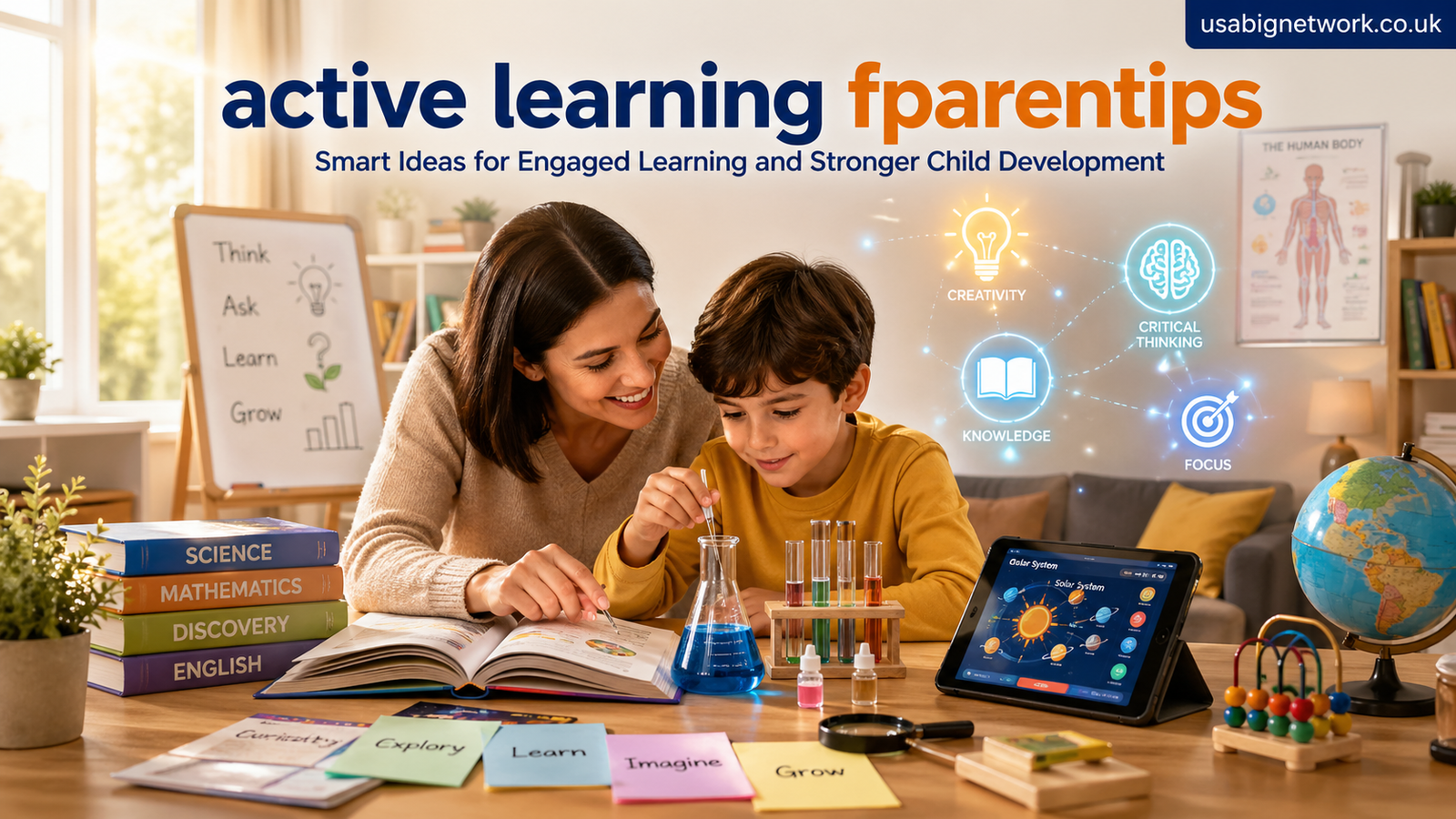
Parenting in the modern world is changing rapidly. Families today are no longer focused only on traditional teaching methods where children quietly listen and follow instructions without interaction. Instead, many parents are now embracing active learning strategies that encourage children to think, participate, ask questions, solve problems, and develop independence from an early age. This growing parenting approach is often connected to the idea of “active learning fparentips,” a phrase increasingly associated with smart parenting techniques, child-centered education, emotional intelligence, and practical family learning methods.
Active learning parenting focuses on engagement rather than passive instruction. Instead of telling children what to do at every moment, parents guide them through experiences that help them understand situations independently. Research in education and child psychology consistently shows that children learn more effectively when they are emotionally involved and mentally engaged in the learning process. active learning fparentips Modern experts in parenting and education believe that children develop stronger communication skills, confidence, active learning fparentips creativity, and emotional resilience when parents create environments that encourage exploration and thoughtful interaction.
The rise of digital technology, changing school systems, and increasing awareness of mental health have also influenced how parents approach child development. Families now recognize that academic success alone is not enough. Emotional intelligence, critical thinking, adaptability, communication, active learning fparentips and self-confidence are equally important for long-term success in life. Active learning parenting combines these goals into one balanced approach that supports children academically, emotionally, and socially. As more parents search for practical ways to strengthen family relationships while improving child development, active learning fparentipscontinues gaining attention as a valuable modern parenting philosophy.
Understanding the Meaning of Active Learning FParentips
The concept behind active learning fparentips is rooted in the broader educational principle of active learning. In schools and universities, active learning refers to teaching methods that involve participation, discussion, collaboration, reflection, and hands-on activities rather than passive memorization. When applied to parenting, the same principle encourages children to become active participants in their own development rather than simply following directions without understanding.
Parents who practice active learning methods focus on guiding children through experiences that help them think critically and make informed decisions. This may involve encouraging children to solve problems independently, discussing emotions openly, active learning fparentips asking thoughtful questions, or participating in real-world activities that teach life skills naturally. Instead of relying solely on discipline or instruction, active parenting emphasizes communication, involvement, and emotional connection.
This parenting style also recognizes that every child learns differently. Some children learn best through observation, while others prefer discussion, creativity, movement, or experimentation. Active learning parenting allows parents to adapt their teaching methods according to the child’s personality, emotional needs, and developmental stage. active learning fparentips By understanding how children process information and emotions, parents can create healthier learning environments that support both academic growth and emotional well-being.
Another important aspect of active learning fparentips is the idea of partnership between parents and children. Rather than maintaining a strictly authoritarian relationship, parents become guides, mentors, and supportive role models. Children are encouraged to express opinions, ask questions, and explore interests while parents provide structure, safety, and guidance. This balance helps children develop independence without feeling emotionally disconnected from their families.
Why Active Learning Is Important for Child Development
Child development experts increasingly emphasize that children learn more effectively when they actively participate in experiences instead of passively receiving information. Active learning stimulates multiple areas of the brain, improving memory retention, problem-solving abilities, active learning fparentips communication skills, and emotional awareness. Children who engage actively with their environment often become more curious, adaptable, and confident.
One major advantage of active learning parenting is its impact on emotional development. Children who are encouraged to communicate openly with parents usually feel more emotionally secure and supported. They learn how to express emotions in healthy ways, discuss concerns honestly, active learning fparentips and build stronger trust within family relationships. Emotional safety plays a critical role in helping children manage stress, develop resilience, and maintain healthy social relationships throughout life.
Active learning also improves cognitive development because children learn through exploration and critical thinking rather than memorization alone. When parents encourage children to analyze situations, active learning fparentips ask questions, and experiment with solutions, children develop stronger reasoning skills. active learning fparentips These abilities become valuable not only in school but also in everyday decision-making and future careers.
Modern parenting research also highlights the importance of independence in child development. Children who are constantly controlled or overprotected may struggle with confidence and problem-solving later in life.active learning fparentips parenting allows children to practice responsibility gradually while still receiving guidance and support. This balanced approach helps children build confidence without feeling abandoned or pressured.
Social development is another significant benefit of active learning strategies. Children who participate in discussions, teamwork, and collaborative problem-solving often develop stronger interpersonal skills. They learn empathy, patience, cooperation, active learning fparentips and respectful communication through real-life family interactions. These social skills become essential for building friendships, succeeding academically, and navigating adult relationships successfully.
The Role of Communication in Active Parenting
Communication is the foundation of active learning parenting. Strong communication allows parents to understand their children’s thoughts, emotions, active learning fparentips fears, and interests while helping children feel respected and emotionally valued. Active parenting encourages open conversations rather than one-sided instructions or constant criticism.
One essential communication skill in active parenting is active listening. Many parents hear their children speak without truly listening carefully to their emotions or concerns. Active listening involves giving children full attention, responding thoughtfully, and acknowledging feelings without immediate judgment. This creates emotional trust and encourages children to communicate openly about both positive and difficult experiences.
Children who experience healthy communication at home are more likely to develop confidence in expressing themselves socially and emotionally. active learning fparentips They become better at discussing problems, asking for help, and resolving conflicts peacefully. Communication also helps parents identify emotional or behavioral challenges early before they become more serious.
Another important aspect of communication is emotional validation. Children often experience strong emotions they do not fully understand. Instead of dismissing emotions with phrases like “stop crying” or “you are overreacting,” active parenting encourages understanding and empathy. active learning fparentips When parents acknowledge emotions calmly, children learn that feelings are normal and manageable rather than something shameful or frightening.
Family discussions also provide opportunities for learning and emotional growth. Conversations during meals, car rides, or bedtime can help children improve vocabulary, critical thinking, active learning fparentips and emotional awareness. Simple discussions about daily experiences teach children how to reflect, analyze situations, and communicate respectfully with others.
Encouraging Curiosity and Independent Thinking
Curiosity is one of the most powerful tools for learning. Children are naturally curious about the world around them, and active learning parenting encourages parents active learning fparentips to nurture that curiosity instead of limiting it. Curious children tend to become lifelong learners who enjoy discovering new ideas, solving problems, and exploring creativity.
Parents can encourage curiosity by allowing children to ask questions freely without fear of criticism. Even difficult or repetitive questions help children understand how the world works. Instead of always giving immediate answers, parents can guide active learning fparentips children toward discovering answers independently through observation, experimentation, reading, or discussion.
Independent thinking is closely connected to curiosity. Children who are encouraged to think independently become more confident in making decisions and solving problems.active learning fparentips avoids over-controlling every situation because excessive control can limit creativity and reduce self-confidence. Instead, parents guide children while allowing them space to make age-appropriate choices and learn from experiences.
Creativity also plays an important role in active learning. Creative activities such as storytelling, drawing, imaginative play, music, active learning fparentips or building projects encourage flexible thinking and emotional expression. These activities strengthen cognitive development while helping children explore emotions and ideas naturally.
Children who develop strong curiosity and independent thinking skills are often better prepared for future academic and professional challenges. active learning fparentips They become adaptable learners capable of analyzing information critically instead of relying entirely on external direction. In a rapidly changing world, these qualities are increasingly valuable for long-term success.
Using Everyday Activities as Learning Experiences
One of the greatest advantages of active learning parenting is that meaningful learning can happen during ordinary daily activities. Parents do not need expensive educational programs or complicated teaching systems to support child development. Simple real-life experiences often provide some of the most valuable lessons.
Cooking together is an excellent example of active learning at home. Children can practice reading instructions, measuring ingredients, understanding time management, active learning fparentips and improving fine motor skills while preparing meals. At the same time, cooking encourages teamwork, communication, patience, and responsibility.
Shopping trips can also become educational experiences. Parents may involve children in budgeting decisions, comparing prices, reading labels, or planning purchases. active learning fparentips These activities teach practical mathematics, financial awareness, decision-making, and critical thinking in ways that feel natural rather than forced.
Household responsibilities also contribute to child development when approached positively. Cleaning, organizing, gardening, or caring for pets teach responsibility, active learning fparentips discipline, cooperation, and independence. Instead of treating chores only as obligations, active learning parenting frames them as opportunities for growth and participation within the family.
Outdoor experiences are equally important. Nature walks, sports, parks, and physical activities support both physical health and mental development. active learning fparentips Outdoor exploration stimulates curiosity, observation skills, creativity, and emotional relaxation while reducing excessive screen dependence.
Reading together remains one of the most powerful learning activities for children of all ages. Shared reading improves language development, comprehension, imagination, and emotional connection between parents and children. Discussing stories and asking reflective questions further strengthens critical thinking and communication skills.
Emotional Intelligence and Mindful Parenting
Emotional intelligence has become one of the most discussed topics in modern parenting because emotional health significantly affects academic performance, relationships, and overall life satisfaction. Active learning parenting strongly emphasizes emotional awareness and mindful communication within the family environment.
Children learn emotional regulation primarily by observing adult behavior. Parents who manage stress calmly and communicate respectfully provide powerful examples for children to follow. When parents react aggressively or dismiss emotions, children may struggle to develop healthy coping skills.
Mindful parenting involves paying attention to children’s emotional needs without constant distraction or judgment. In today’s technology-driven world, many families spend less quality time interacting directly with one another. Active parenting encourages parents to remain emotionally present and engaged during conversations and activities.
Teaching emotional intelligence also requires helping children identify and understand emotions. Children often experience frustration, sadness, fear, jealousy, or disappointment without fully understanding these feelings. Parents can support emotional growth by discussing emotions openly and helping children find healthy ways to respond.
Empathy is another essential part of emotional intelligence. When children learn to recognize and respect the emotions of others, they develop stronger social relationships and conflict-resolution skills. Family discussions about kindness, fairness, and understanding different perspectives help children become emotionally mature and socially responsible individuals.
Mindful parenting also benefits parents themselves. Parents who practice emotional awareness often develop greater patience, reduced stress, and stronger relationships with their children. This creates healthier family dynamics and a more supportive home environment overall.
Balancing Discipline and Freedom
Many parents struggle to find the right balance between discipline and independence. Active learning parenting does not eliminate discipline or boundaries. Instead, it focuses on creating balanced guidance that supports both structure and personal growth.
Children need clear expectations and consistent rules to feel secure. Without structure, children may become confused or anxious about boundaries and responsibilities. However, overly strict control can limit creativity, confidence, and emotional openness. Active parenting seeks a middle ground where children understand expectations while still having opportunities for independence.
Natural consequences are an important part of balanced parenting. Instead of constantly rescuing children from mistakes, parents can allow children to experience manageable consequences and learn from them. This approach teaches responsibility and problem-solving more effectively than punishment alone.
Positive discipline methods are often more effective than fear-based approaches. Respectful communication, consistency, and problem-solving discussions help children understand behavior expectations without damaging emotional trust. Children are more likely to cooperate when they feel respected and understood rather than controlled through fear.
Freedom within safe boundaries encourages children to develop decision-making skills gradually. Parents may allow children to choose hobbies, organize schedules, or solve conflicts independently while remaining available for support when needed. This balance builds confidence and accountability simultaneously.
Healthy discipline also involves emotional regulation from parents. Reacting impulsively with anger or harsh criticism may create fear rather than understanding. Calm and thoughtful responses teach children how to manage difficult situations maturely and respectfully.
Technology, Screen Time, and Digital Learning
Technology has become deeply integrated into modern childhood, making digital learning an important topic in active parenting. While technology offers educational opportunities, excessive passive screen use can negatively affect attention span, sleep quality, social interaction, and emotional well-being.
Active learning parenting encourages purposeful and interactive technology use rather than passive entertainment consumption. Educational apps, creative projects, coding programs, online learning tools, and digital storytelling can support cognitive development when used thoughtfully.
Parents play an important role in helping children develop healthy digital habits. Setting consistent boundaries around screen time helps children maintain balance between online activities and real-world experiences. Families benefit when technology does not replace communication, physical activity, creativity, or emotional connection.
Digital literacy is another important skill in modern parenting. Children need guidance in understanding online safety, misinformation, cyberbullying, and responsible social media behavior. Active parenting includes open discussions about internet use, privacy, critical thinking, and respectful online communication.
Family involvement in digital activities can also improve learning experiences. Watching educational videos together, discussing online content, or participating in interactive games allows parents to stay connected with children’s interests while encouraging thoughtful engagement rather than passive consumption.
Balancing technology with offline experiences remains essential for healthy development. Outdoor play, reading, social interaction, and creative activities continue to play critical roles in emotional and cognitive growth despite technological advancements.
Common Parenting Mistakes That Limit Active Learning
Even caring and dedicated parents sometimes unintentionally limit active learning opportunities. One common mistake is overprotecting children from challenges or discomfort. While parents naturally want to help children succeed, constantly solving every problem can reduce independence and resilience.
Another mistake involves excessive criticism or unrealistic expectations. Children who fear failure may avoid taking risks, asking questions, or trying new experiences. Active learning requires emotional safety where mistakes are treated as opportunities for growth rather than reasons for shame.
Inconsistent discipline can also create confusion and emotional insecurity. Children benefit from predictable expectations and calm communication. When rules change constantly or parents react emotionally without consistency, children may struggle with behavior and trust.
Over-scheduling children is another growing concern in modern parenting. Many children participate in numerous structured activities with little time for free play, creativity, or relaxation. Active learning parenting recognizes the importance of unstructured time for imagination, reflection, and independent exploration.
Lack of emotional availability can also affect child development significantly. Busy schedules, work stress, and excessive technology use sometimes reduce meaningful family interaction. Children need emotional connection and attention to feel secure and valued.
Comparing children to siblings or peers may also harm self-esteem and motivation. Every child develops differently and possesses unique strengths. Active parenting focuses on individual growth and encouragement rather than competition or constant comparison.
Creating a Lifelong Learning Environment at Home
The most successful active learning families create home environments where learning becomes part of everyday life rather than a separate activity connected only to school. Children develop stronger curiosity and motivation when parents model learning, communication, and personal growth consistently.
Parents who demonstrate curiosity themselves often inspire similar attitudes in children. Reading books, discussing ideas, learning new skills, or exploring hobbies together shows children that learning continues throughout adulthood. Children are highly influenced by what parents model daily.
Encouraging questions and open discussions also strengthens lifelong learning habits. Families that value curiosity and thoughtful conversation create emotionally supportive environments where children feel safe exploring ideas and expressing themselves openly.
Celebrating effort rather than perfection is equally important. Children who receive encouragement for persistence and improvement often develop stronger motivation and resilience. Focusing only on results or grades may reduce confidence and create fear of failure.
Creating positive routines can also support active learning at home. Regular reading time, family discussions, creative activities, outdoor experiences, and shared responsibilities contribute to healthy development and stronger family relationships.
Most importantly, active learning parenting recognizes that childhood development is a continuous process rather than a race for perfection. Every child grows differently, and every family faces unique challenges. Consistency, emotional connection, patience, and involvement matter more than achieving unrealistic standards of perfect parenting.
Conclusion
Active learning fparentips represents a modern parenting philosophy focused on engagement, communication, emotional intelligence, and practical life learning. Instead of relying entirely on passive instruction or strict control, active learning parenting encourages children to participate actively in their own development through curiosity, exploration, discussion, and real-life experiences.
This parenting approach supports not only academic success but also emotional resilience, confidence, creativity, and social development. Children who grow up in emotionally supportive and intellectually engaging environments often become more adaptable, independent, and capable of handling challenges throughout life.
Active parenting does not require expensive resources or perfect parenting skills. Small everyday interactions, meaningful conversations, active listening, and thoughtful guidance can significantly influence child development over time. By encouraging curiosity, balancing discipline with freedom, managing technology wisely, and supporting emotional growth, parents can create healthier family relationships and stronger lifelong learning habits.
As parenting continues evolving in the modern world, active learning principles remain increasingly valuable because they prepare children not only for school but also for real-life success, emotional well-being, and meaningful human connection.